When Medical History Is Fragmented, Families Are Left Unprepared
Why caregivers feel blindsided in urgent moments — and what needs to change
If you've ever rushed a loved one to urgent care or the emergency room, you know the feeling.
You're asked questions you should know the answers to:
- What medications are they taking?
- When was their last lab?
- Any allergies? Recent diagnoses? Specialist visits?
You pause. You guess. You scroll through emails. You text siblings.
And suddenly, the weight of the moment becomes heavier — not just because of what's happening medically, but because you don't have the clarity you need.
For many families, this isn't a rare experience. It's a predictable outcome of a healthcare system where medical history lives in too many places, across too many portals, in formats that weren't designed for everyday people — especially caregivers.
Even though most people now have online access to their health records, a sizable share still doesn't use it.
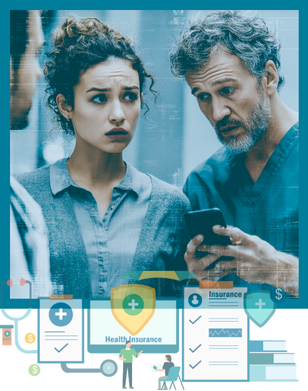
According to Health IT, Individuals' Access and Use of Patient Portals and Smartphone Health Apps, reported as of 2022, 73% of adults were offered online access. Still, only 57% accessed their records, mainly due to the complexity around multiple systems and the challenge with data interpretation.
The Hidden Cost of Fragmented Medical Records
Today's healthcare journey rarely happens in one place.
Most people see a primary care doctor, one or more specialists, labs, imaging centers, behavioral health providers, urgent care clinics, and hospitals — often across different networks and systems. Each interaction generates a piece of medical history, but those pieces don't automatically connect.
Instead, they're stored in separate portals, PDFs, or systems that don't speak to one another. Data shows that even though electronic health records (EHRs) are now widely adopted, true interoperability remains limited in practice.
In 2023, about 70% of U.S. non-federal acute care hospitals reported engaging in interoperable exchange (sending, receiving, finding, and integrating health data). Still, less than half routinely did so, and clinicians reported using outside health information only about 42% of the time at the point of care. This means that, even when data exists electronically, it often isn't routinely accessible or used where it matters most. Source: Health IT Government Data Brief on Hospital Interoperability, 2023
So, we know on paper, the information exists. In practice, it's scattered and that fragmentation creates real consequences:
- Important context is lost between visits.
- Records are difficult to access quickly.
- Families are left to assemble the full picture themselves.
- Critical details can be overlooked in high-pressure moments.
Medical history becomes something families know is out there — but can't reliably reach when it matters most.
Why Caregivers Feel Especially Unprepared In Urgent Care Moments
For caregivers — particularly those in the sandwich generation balancing care for children and aging parents — this fragmentation hits harder. You're not just responsible for your own health. You're often expected to help manage someone else's.
Parents assume that once they hit 18, adult children know their history. Adult children assume parents are still keeping track. Siblings assume someone else has the details. Until that urgent moment exposes the truth: no one has the whole picture.
Caregivers are suddenly asked by doctors and nurses to recall lab trends, medication changes, specialist recommendations, or past diagnoses — often under stress, with limited time, and incomplete information. The problem isn't a lack of care or effort. It's that the system was never designed for shared, real-world caregiving.

The Emotional Toll We Rarely Acknowledge
Fragmented medical data doesn't just create logistical challenges. It creates emotional ones. Caregivers often describe feeling:
- Anxious heading into appointments.
- Afraid of missing something important.
- Guilty for not being “more prepared.”
- Overwhelmed by medical language, they don't fully understand.
And yet, caregivers are expected to advocate confidently — especially in urgent or life-altering situations — but without clear, accessible information.
You shouldn't need a medical degree to understand what's happening to someone you love.
Why “Knowing Your Medical History” Isn't Enough Anymore
We're often told to “know our medical history.” But in today's healthcare environment, that advice oversimplifies the reality. Knowing your history requires:
- Access across providers and systems.
- Up-to-date, accurate information.
- Clear, understandable presentation.
- The ability to share information quickly and securely.
- Confidence that what you're seeing reflects the full picture.
Without those conditions, “knowing” turns into guessing — and guessing has no place in urgent care decisions.
A Shift Toward Proactive, Family-Centered Care
More families are beginning to ask important questions:
- Why is my medical information so hard to access?
- Why does every appointment feel like starting over?
- Why am I expected to be the system integrator for my family's health?
These questions reflect a broader shift — from reactive healthcare to proactive care management.
Families want:
- Clarity before emergencies happen.
- Confidence walking into appointments.
- A way to see patterns over time.
- Tools that support caregiving instead of adding stress.
They're not asking for perfection. They're asking for preparedness.
Preparedness for Family Healthcare Starts With Clarity
Urgent medical moments don't create chaos — they reveal it. When families feel unprepared, it's not a personal failure. It's a systemic one. But that's beginning to change.
Healthcare is slowly moving toward a future where patients and caregivers are the access point — where medical information is connected, current, and understandable.
Because when families have clarity, they can:
- Ask better questions.
- Advocate more confidently.
- Reduce unnecessary stress.
- Make informed decisions faster.
Preparedness isn't about memorizing details. It's about having the right information, at the right time, in a form you can understand.
The Conversation Is Changing — and Families Are Leading It
Across kitchen tables, waiting rooms, and group texts, caregivers are coming to the same realization – it shouldn't be this hard.
And, they're right.
As healthcare evolves, the voices of patients and caregivers — especially those balancing care across generations — are shaping what modern care should look like.
Clarity.
Access.
Understanding.
Preparedness.
Not someday.
Now.
Healthcare shouldn't feel harder than it needs to be.
At Docsnap, we're building resources to help families navigate the complexity of modern healthcare with confidence, not overwhelm — before urgent moments happen.