Navigating New Territory: Molly's Story
One Patient's Story Reveals Why Keeping Your Family's Medical Records in One Place Could Save a Life.
As parents of teens, our worries are always in flux, shifting day to day — ranging from friendships and peer pressure to academics and athletics — feeling disconnected or far too connected to the digital world they navigate. All of which are normal. None of which is easy.
But imagine if all the above instantly became the least of your caregiving concerns? And your top priority was now uncovering how to keep your once-thriving teenager alive and well, again.
That's where 17-year-old Molly's story begins…
The Diagnosis Maze — When Care Becomes Complicated
At first, her symptoms were scattered but serious: she couldn't eat without pain, couldn't stand without fainting, and was experiencing seizures and wild blood sugar swings. She did what any of us would do — followed every referral.
Gastroenterology. Cardiology. Endocrinology. Neurology. Pulmonology. Hematology. Infectious Disease. Primary Care. Each doctor treated a symptom, not a person.
Each prescription promised relief, but together they created chaos.
Navigating a fragmented healthcare system is a challenge in and of itself, with many patients in the U.S. seeing multiple physicians. While having multiple physicians may be appropriate, 34% of primary care physicians in a national study reported that they do not always receive useful information from specialists about the patients they referred.
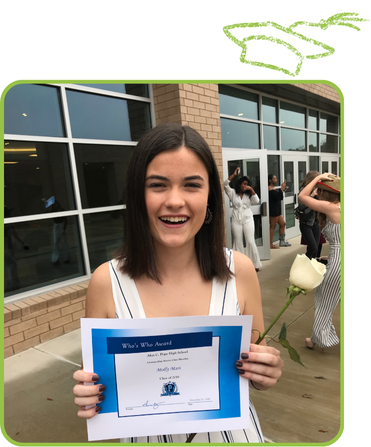
Soon, her bedroom looked like a pharmacy shelf — dozens of bottles, each representing another guess, another blind spot, another attempt to “fix” what no one fully understood.
And still, she was getting worse. Leaving her parents, Anthony and Jennie, discouraged, scared, and furious with a tangled healthcare system. To them, it felt as if hospitals and doctors were prioritizing insurance protocols over patient care.
Meanwhile, their daughter was an unsolvable puzzle, riddled with pain and uncertainty. The impact beyond the exam rooms was invisible to nurses and physicians, but in plain sight to the household Molly and her parents returned home to.
Siblings and grandparents sat on the sidelines, struggling to understand why no one could help Molly find her way out of the woods.
When your children are sick, you shouldn't have to act as your own medical detective. Yet that's exactly what was happening to Molly and her parents — a story that could happen to any of us navigating today's fragmented healthcare system.
The Cost of Disconnected Care
No one checked the full medication list. No one saw the overlap. No one realized that the combination of prescriptions was creating its own storm inside her body.
She was taking painkillers meant for short-term use. Anti-anxiety meds that blurred her memory. Pills to manage the side effects of other pills. By 18, she was fighting for her health — and her identity — lost in a cycle of overprescription that almost broke her due to fragmented health systems.
The Moment of Clarity — A Wake-Up Call for Every Caregiver
After one terrifying hospital stay, she did what no patient should have to do: she stopped everything, cold turkey. It was painful. It was dangerous. But it was the first step toward reclaiming her mind, her body, and her voice.
Looking back, she says: “If I'd had my medical records in my hand — from every specialist, every system — this wouldn't have happened. My parents and I could've seen what no one else could see. My doctors could've, too.”
Self-advocacy can be powerful. In Molly's case, she had the awareness to sense that something in her body needed to stop for her to gain the clarity required to navigate her return to “normal.” However, this isn't always the experience for every child, so it is crucial that caregivers are also equipped with the necessary information to advocate for their loved ones.
The Bigger Problem - America's Quiet Epidemic of Overprescribing
Overprescribing isn't rare. — it's a quiet epidemic. The circumstances of which can be catastrophic and one the U.S has been faced with since 1999
It happens when systems don't talk to each other. When specialists are trained to treat symptoms, not the root cause. When information is buried in portals, forms, and faxes. Instead of a story that lives and breathes on the surface of all of it.
Patients lose visibility. Families lose peace of mind. And care becomes something you manage, not something that helps you heal.
What Healthcare Looks Like Without the Hassle:
Introducing Docsnap. The shortcut to a better healthcare experience. Let's face it - being the heartbeat of your family means making countless decisions every day. Docsnap eases the stress of communicating with doctors, managing medical records, and accessing telehealth and behavioral healthcare when you need it most, so you can focus on what matters most: your family.
It's the app that lets you see what every doctor sees — securely, simply, and all in one place. No more repeating your medication list. No more guessing which system has your latest lab results. No more leaving your health to chance.
Healthcare Shouldn't Be a Scavenger Hunt
Docsnap turns fragmented care into connected care — so that stories like Molly's become a thing of the past.
- It's not just convenient. It's protection.
- It's not just technology. It's advocacy.
- It's not just another app. It's peace of mind.
Subscribe and Download Docsnap today to see what healthcare looks like without the hassle. Because your health story deserves to be told — clearly, completely, and in your control.
